
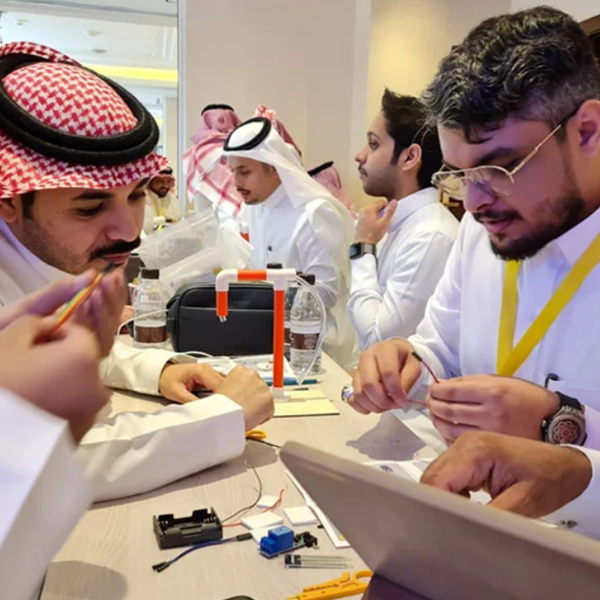



Many organizations today invest heavily in employee development.
They offer leadership programs.
They introduce learning platforms.
They partner with training companies in Dubai to strengthen skills across their workforce.
On paper, everything looks right.
Employees have access to development opportunities. Training budgets increase each year. Learning initiatives are promoted across the organization.
Yet something surprising still happens.
Despite all this investment, employees continue to leave.
In some cases, companies that invest significantly in training still struggle with employee retention.
This creates an important question for many organizations:
Why do employees leave even when companies invest in training?
The answer reveals an important truth about modern workplaces: training alone does not guarantee employee engagement or long-term commitment.
To truly retain talent, organizations must go beyond training programs and focus on the broader employee experience.
Training Is Important, But It’s Only One Piece of the Puzzle
Learning and development remain essential components of a healthy organization. Training helps employees:- build new skills
- improve performance
- prepare for leadership roles
- adapt to changing business environments
- leadership quality
- career growth opportunities
- organizational culture
- workload balance
- recognition and trust
The Difference Between Training and Growth
One of the most common reasons employees leave despite training opportunities is the difference between learning and growth. Training programs may teach valuable skills, but employees also want to see how those skills connect to their future within the company. Employees typically ask themselves questions such as:- Will this training help me advance in my career?
- Does my organization recognize my potential?
- Are there opportunities for me to grow here?
Leadership Quality Matters More Than Training
Another critical factor influencing retention is leadership. Employees often say they leave companies because of management rather than the organization itself. Even the best training programs cannot compensate for poor leadership. Employees are more likely to stay in organizations where leaders:- communicate clearly
- provide regular feedback
- support professional growth
- create psychologically safe environments
When Training Feels Like an Obligation Instead of an Opportunity
In some organizations, training programs are introduced without fully considering the employee experience. For example, employees may be required to attend programs that:- feel unrelated to their roles
- add to already heavy workloads
- lack clear relevance to career goals
The Role of Organizational Culture
Culture plays a powerful role in determining whether employees remain with an organization. Even when companies invest in training, a weak organizational culture can undermine those efforts. Employees want to feel that they work in environments where:- their contributions are recognized
- collaboration is encouraged
- leadership is transparent
- learning is genuinely valued
When Employees Do Not See Their Skills Being Used
Another challenge occurs when employees gain new skills through training but are not given opportunities to apply them. For example, an employee may complete leadership training but still lack opportunities to lead projects or teams. Over time, this disconnect can lead to frustration. Employees want to see their development translated into real responsibilities. Organizations that integrate training with career development frameworks are more likely to retain high-performing employees. An experienced l&d consulting company UAE often helps organizations align training initiatives with career progression systems.Career Development Is the Real Retention Strategy
Many organizations mistakenly assume that training itself is the retention strategy. In reality, training is most effective when it supports a broader career development framework. Employees want to understand:- how their skills can evolve within the company
- what opportunities exist for advancement
- how leaders support their professional growth
The Importance of Manager Support
Managers play a crucial role in how employees experience training. Managers influence whether employees feel supported in applying what they learn. When managers:- encourage development
- provide opportunities to practice new skills
- recognize progress
The Role of HR in Retention and Development
HR teams are responsible for designing systems that support employee development and retention. Modern HR functions work closely with both leadership and learning teams to create integrated development strategies. Many organizations collaborate with external specialists such as HR consultants in Dubai to strengthen areas including:- talent management
- leadership pipeline development
- employee engagement initiatives
- learning strategy design
Where HNI Fits In
For more than 13 years, HNI has supported organizations across the Middle East in strengthening leadership, management, and organizational capability. Headquartered in the UAE with offices in Saudi Arabia, HNI has evolved into a leading L&D solutions architect serving organizations across multiple industries. Through its integrated development approach, HNI works closely with companies to design learning and capability initiatives that go beyond standalone training programs. As a trusted l&d consulting company UAE, HNI helps organizations:- align learning initiatives with business strategy
- develop leadership and management capability
- strengthen talent development systems
- create learning cultures that support long-term growth
